On this page
BGE (2023-2026)
The overriding aim of the Biodiversity Genomics Europe (BGE) project was to accelerate the use of genomic science to enhance understanding of biodiversity, monitor biodiversity, and guide interventions to address its decline. To deliver this, BGE brought together two then newly-formed networks: iBOL Europe, and ERGA, and implemented an ambitious programme of initiatives that this page summarises.
How BGE worked
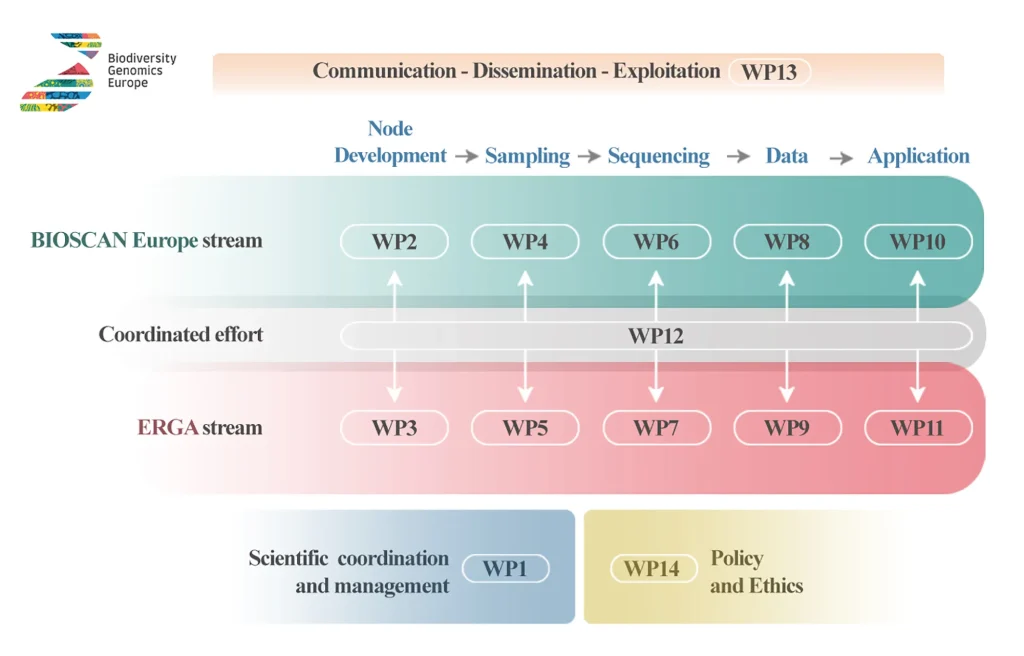
The BGE project was organised around two main streams of work: one focusing on DNA barcoding (coordinated by iBOL Europe), the other on genome sequencing (coordinated by ERGA). Both streams converged in a third ‘joint stream’ designed to connect expertise from both communities in combined actions to capitalise on the benefits of working together. All streams followed the same structure – a sequential chain of five areas of work (known as ‘pillars’): node development, sampling, sequencing, data, and application.
BGE Partners
BGE involved more than 200 institutions, represented in the project by 33 participating partner institutions across 20 countries.
Case studies in BGE
Through its case studies, BGE fostered collaboration and synergy between genomic research, conservation practitioners, relevant stakeholders, and the general public.
Citizen science in BGE
BGE relied on the invaluable help of an army of citizen scientists to help build the map of European biodiversity.
BGE Key achievements: Legacy book
Coming soon