
12 January 2026
Molecular phylogeny reveals a new species of the Hygrobates longipalpis complex from Portugal (Acariformes, Hydrachnidia, Hygrobatidae)
A new BGE paper has been published! The paper called ‘Molecular phylogeny reveals a new species of the Hygrobates longipalpis complex from Portugal (Acariformes, Hydrachnidia, Hygrobatidae)’ was written by Vladimir Pešić, Ekaterina S. Konopleva, Dinis Girão, Chiara Vergata, Luís Guilherme Sousa and Sónia Ferreira.
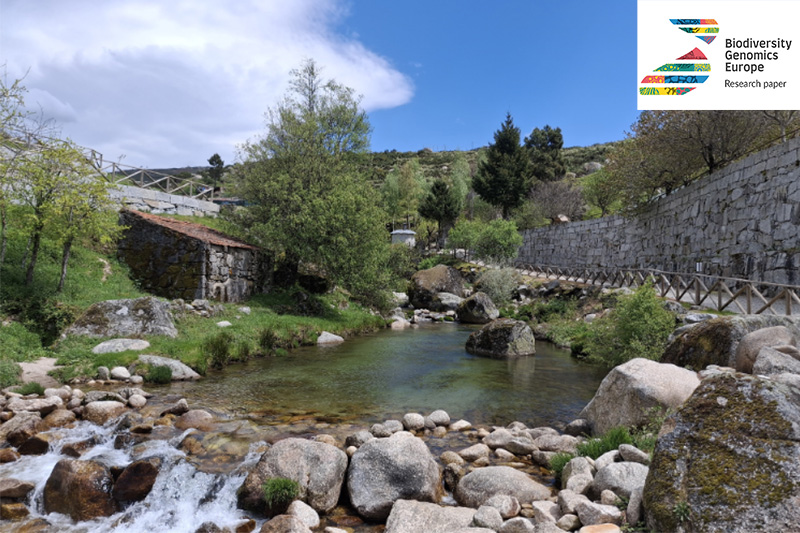
The paper provides a phylogeny of the Hygrobates longipalpis complex and highlights a species new to science (Hygrobates maremagnum n. sp) and its habitat.
Abstract
Water mites of the Hygrobates longipalpis complex are a common group inhabiting both running and standing waters throughout the Palaearctic. This study provides the first time-calibrated phylogeny of this complex. Using fossil-calibrated molecular dating, we infer that the most recent common ancestor of the Hygrobates longipalpis complex originated in the Eocene. The Hygrobates daochengensis clade from China represents the earliest-branching lineage, indicating a non-European origin of the Mediterranean members of the H. longipalpis complex. Hygrobates prosiliens, which inhabits lacustrine environments, diverged from the common ancestral lineage with the remaining European species approximately 21 million years ago. In contrast, the clade comprising H. longipalpis and H. maremagnum n. sp. appears to be younger, with its diversification possibly triggered by Late Miocene–Pliocene geological events, including the Messinian Salinity Crisis (~10 Ma). The latter species is described here from Portugal as new to science using an integrative taxonomic approach.