BGE: Discover Biodiversity in Greece Using DNA Barcoding
School of Biology of the Aristotle University of Thessaloniki
and CERTH (Centre for Research & Technology, Hellas)
Opera House of Thessaloniki
26 September 2025
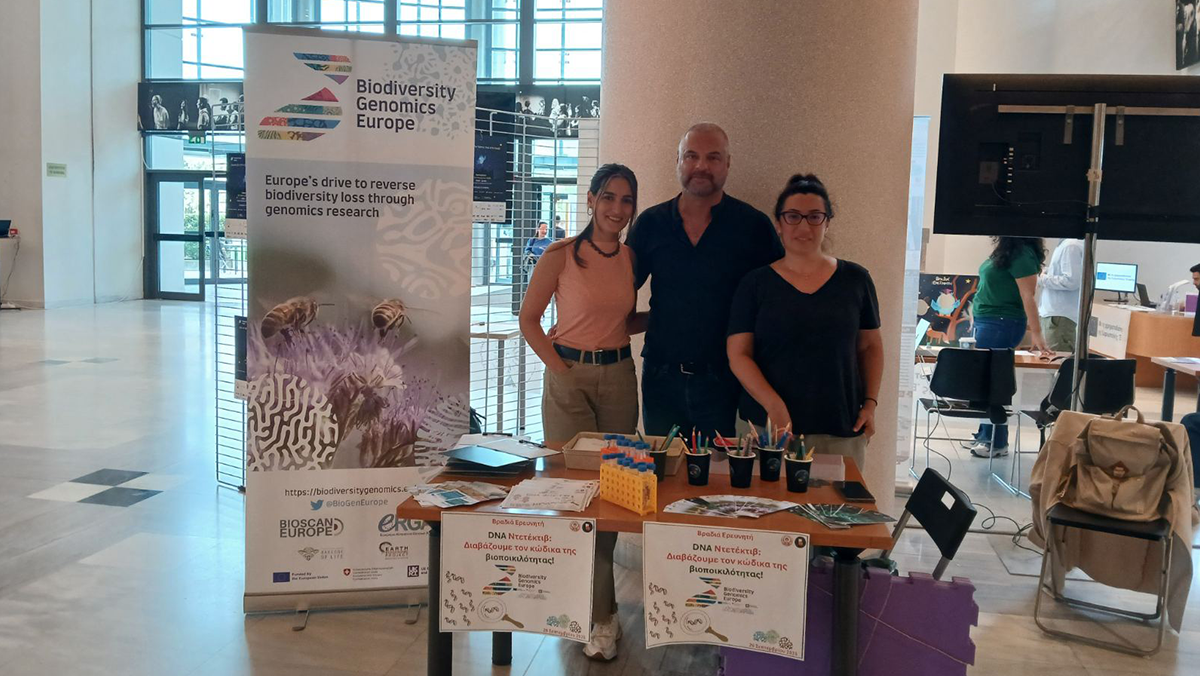
The School of Biology of the Aristotle University of Thessaloniki and CERTH organised the workshop: “BGE: Discover Biodiversity in Greece Using DNA Barcoding” at Opera House of Thessaloniki, Greece.
The attendees included both adults and children who visited the Researcher’s Night Festival. More than 250 people stopped by the BGE booth where they learned about the program and the use of DNA technology for species identification.
Overview of the event
The school of Biology of Aristotle University of Thessaloniki (AUTh) successfully participated in the activities of Researcher’s Night, on Friday 26 of September, in Thessaloniki. Approximately 5,500 people of different ages visited the city’s Opera House to attend this pan European celebration of research. Members of Biodiversity Genomics Europe from AUTh presented the BGE project and the efforts of BGE partners across Europe to enhance the use of genomics in support of biodiversity research and conservation.
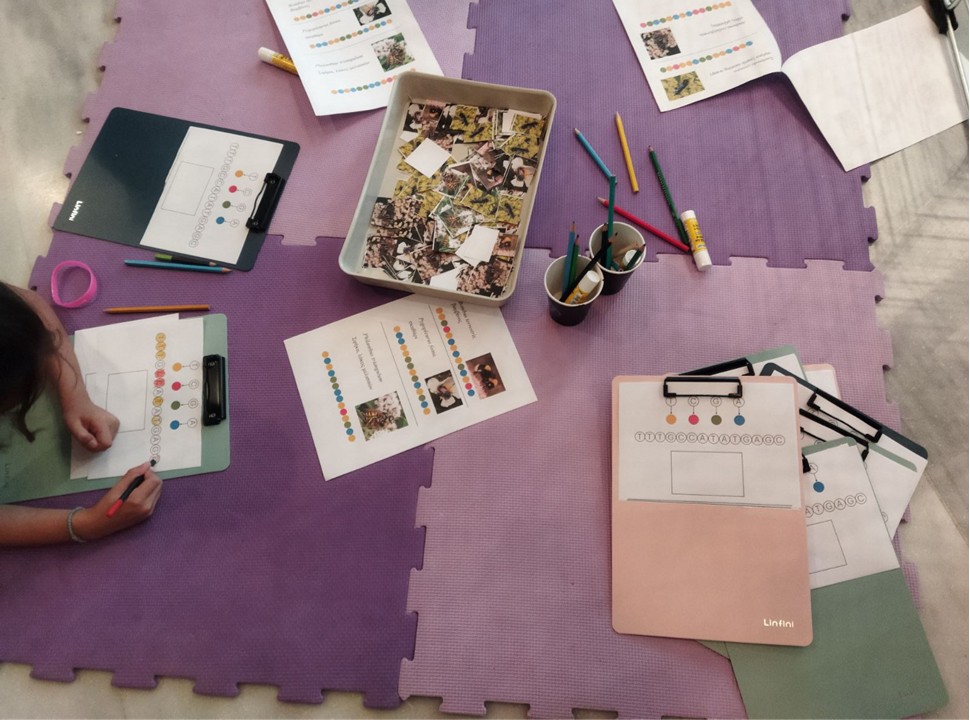
Visitors were informed about the use of DNA for species identification and about the project’s aim to enrich the reference databases for the European eukaryotic species (organisms whose cells have a membrane-bound nucleus, such as plants, animals, fungi etc.). As part of the program’s outreach activities, children aged 7-14 years were introduced to the use of DNA in identifying species found in Greece. A short interactive game was organised in which children used a small fragment of a four-coloured code (DNA barcode) to search for one of eight species found in Greece, representing diverse taxonomic groups. Over 200 children participated in the game; they observed pictures of the selected species and finally they were given an ‘DNA detective certificate’. Additionally, an activity for youger children (4-6 years old) was organised during which they coloured a short DNA barcode sequence and they were introduced to the corresponding pollinator species found in Greece. The audience was offered a comprehensive introduction to biodiversity and its importance, with particular emphasis on how public participation through citizen science initiatives is essential for the success of such efforts.
Goals
- Introduction to the current global biodiversity crisis: Visitors at the BGE booth during the festival were briefly introduced to the current state of the global biodiversity crisis. They were informed about how DNA-based tools can support species identification and how these approaches can contribute to addressing the ongoing loss of biodiversity.
- Highlighting the importance of biodiversity research and the goals of the BGE project: Participants were introduced to the overarching goals of the BGE project, which aims to address the urgent challenge of biodiversity loss through the use of advanced genomic tools and collaborative research across Europe.
- Highlighting the role of non-indigenous species in the biodiversity crisis: Attendees gained insight into how the spread of non-indigenous species beyond their natural distribution ranges is recognised as one of the major human-driven pressures on ecosystems, affecting both biodiversity and ecosystem functioning. Representative examples of marine non-indigenous species recorded in Greek seas were also presented.
- Introducing the use of DNA for species identification (children’s activity): Children were introduced to the concept that DNA is the base of a powerful tool for species identification.
Header: Picture taken at “BGE: Discover Biodiversity in Greece Using DNA Barcoding”.